Bottle drying is an essential step on beer, soft-drink, water, dairy and pharmaceutical filling lines: after rinsing, filling, pasteurising or chilling, water left on bottles, cans and closures causes smudged date codes, poor label adhesion, uneven shrink sleeves and damp cartons. ISE designs and supplies blower-driven air knife drying systems – fast, even, non-contact drying that uses far less energy than compressed air.
Why dry bottles and cans before coding and labelling?
- Date and batch coding: inkjet ink does not adhere to wet surfaces – smudged or missing codes break traceability.
- Labelling and shrink sleeves: water prevents glue adhesion, causing skewed or bubbled labels and cloudy sleeves.
- Packing and storage: moisture wets cartons and promotes mould, rusty caps and stained cans.
- Vision inspection: droplets cause false rejects on fill-level, cap and label inspection.
- Cold-filled containers: condensation keeps forming – dry immediately before the coder and labeller.
Bottle and can drying methods compared
| Method | Advantages | Limitations | Best for |
|---|---|---|---|
| Air knives + high-pressure blower | High flow, low pressure, no compressed air; fast, no heat – safe for PET | Higher initial cost than compressed-air pipes | Medium to high-speed continuous lines (recommended) |
| Compressed-air knives / nozzles | Compact, low investment, quick to install | Very high compressed-air consumption – high energy cost, noisy | Small lines, local spots (necks, caps) |
| Hot-air dryers | Complete drying including neck and base | High energy use; unsuitable for thin PET or cold-filled cans | Glass bottles needing total dryness |
| Suction–blow with bottle rotation | Even drying of all surfaces, including concave bases | Complex, needs space | Lines requiring very high dryness |
ISE air knife drying system for bottles and cans
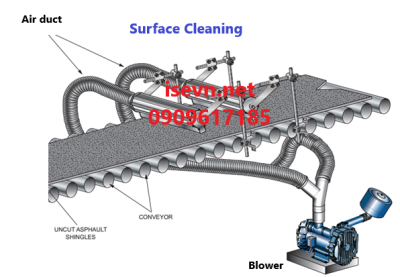
A high-pressure blower (centrifugal or regenerative/ring blower) supplies clean, oil-free filtered air to aluminium or stainless air knives positioned on both sides of and above the conveyor. A thin, high-velocity air curtain strips water from the body, shoulder, neck, cap and base as containers pass. Each layout is designed for the container shape and line speed:
- Side air knives: dry the label and coding areas.
- Top air knives / nozzles: dry caps, necks and can ends (common coding areas).
- Base drying: knives under mesh conveyors or at conveyor transfers.
- Enclosure (tunnel): reduces noise, captures spray and keeps the area clean and hygienic.
- Guide rails and anti-tip: keep light PET bottles stable.
Energy savings: blower vs compressed air
Compressed air is the most expensive utility in a plant. Replacing drilled pipes and compressed-air nozzles with blower-driven air knives usually cuts running costs sharply:
- One bottle-drying system supplier states its blowers use about 70 % less energy than an equivalent compressed-air solution, drying up to 120,000 bottles per hour on a single conveyor (source).
- A Brazilian beverage plant replaced home-made compressed-air blow-offs on three lines with blower air knives, saving over US$20,000 per month with a payback of about three months (Spraying Systems Co. case study).
Actual savings depend on current compressed-air use, line speed and electricity price – ISE measures and calculates them during the site survey.
Selection checklist
| Criterion | Note |
|---|---|
| Container type | PET, glass, aluminium cans, HDPE – different shapes, rigidity and heat tolerance |
| Line speed | Determines number of knives, drying length and blower power |
| Area to dry | Coding area only, label area or whole container (neck, cap, base) |
| Product temperature | Cold containers sweat – dry right before coder and labeller |
| Installation space | Room for access and cleaning; can be retrofitted to existing conveyors |
| Noise & hygiene | Acoustic enclosure, stainless materials, blower inlet filtration |
Standards and safety
- CE-marked electrical equipment and blower motors; control panels to EN 60204-1.
- Stainless, easy-clean materials in the food zone to suit filling-line hygiene requirements.
- Acoustic enclosures help keep workplace noise within the exposure limits of Directive 2003/10/EC.
Recommended solutions
- High-speed PET, glass or can lines: enclosed side + top blower air knife system; add neck and base drying where complete dryness is required.
- Small lines drying only the coding area: short air knife or nozzle right before the inkjet coder, driven by a small ring blower instead of compressed air.
- Currently using drilled compressed-air pipes: ISE surveys and measures air consumption and proposes a blower conversion to cut energy costs.
FAQ
Do blower air knives dry as well as compressed air?
Yes. High-pressure blowers deliver large air volumes that dry bodies, caps and necks at high line speeds; compressed air is only needed for very small, local spots.
Can the system be fitted to an existing conveyor?
Yes. Air knives and brackets are designed around your conveyor, with only a short line stop for installation.
What information is needed for a quotation?
Container type and size, line speed (containers/hour), area to dry, conveyor width, mounting location and available power; if using compressed air now, its pressure and consumption.
Related
Contact ISE for bottle drying solutions
EQUIPMENT INDUSTRIAL SOLUTION CO., LTD (ISE) – Ho Chi Minh City, Vietnam – surveys filling lines and designs and supplies air knife drying systems for breweries, soft-drink, dairy and pharmaceutical plants.
Contact us: Sales +84 909 617 185 – Technical +84 979 117 185 – Email: [email protected]